
FED POLICY UNDER PRESSURE
A Monetary Conference
January 16, 2026
Boca Raton, FL
9:30am-5:30pm
The Federal Reserve is in the public eye as economic and political pressures mount. Is the Fed’s independence at risk? Can it keep its dual mandate in balance when price stability and maximum employment objectives conflict? Will rising government debt see fiscal policy concerns dominate monetary policy decisions? Join leading monetary scholars as they consider how today’s political economy pressures shape tomorrow’s monetary policy.
Brought to you by Florida Atlantic University College of Business, American Institute for Economic Research, and the Shadow Open Market Committee
KEYNOTE SPEAKERS
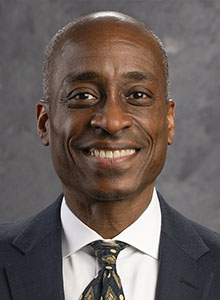
Philip N. Jefferson
Vice Chair, Federal Reserve Board of Governors

Tyler Goodspeed
Chief Economist, ExxonMobil and former Acting Chair, Council of Economic Advisers
Agenda
9:30 am–10:00 am REGISTRATION
10:00 am–10:10 am WELCOME
- Daniel Gropper, Dean, College of Business, Florida Atlantic University
10:10 am–10:40 am OPENING ADDRESS
- Tyler Goodspeed, Chief Economist, ExxonMobil; Former Acting Chair, Council of Economic Advisers
10:40 am–11:50 am SESSION 1: CENTRAL BANK INDEPENDENCE
- Andrew Levin, Professor of Economics, Dartmouth College; Member, Shadow Open Market Committee
- Kathryn Judge, Harvey J. Goldschmid Professor of Law, Columbia Law School
- Bryan Cutsinger, Assistant Professor of Economics, Florida Atlantic University; Fellow, Sound Money Project at the American Institute for Economic Research
- Moderator: Paul Mueller, Senior Research Fellow, American Institute for Economic Research
11:50 am–12:10 pm BREAK
12:10 pm–1:00 pm LUNCH
1:00 pm–2:10 pm SESSION 2: THE FED’S MANDATES
- Peter Ireland, Professor of Economics, Boston College; Member, Shadow Open Market Committee
- Alex Schibuola, Senior Economist, U.S. Department of the Treasury, Office of Economic Policy
- William J. Luther, Associate Professor of Economics, Florida Atlantic University; Director, Sound Money Project at the American Institute for Economic Research
- Moderator: Lydia Mashburn Newman, Managing Director, Monetary Economics, American Institute for Economic Research
2:10 pm–3:20 pm SESSION 3: FISCAL DOMINANCE
- Michael D. Bordo, Board of Governors Professor of Economics and Distinguished Professor Emeritus, Rutgers University; Duncan Stewart Distinguished Visiting Fellow, Hoover Institution; Member, Shadow Open Market Committee
- Mickey D. Levy, Visiting Fellow, Hoover Institution; Member, Shadow Open Market Committee
- Joshua Hendrickson, Chair and Professor of Economics, University of Mississippi; Senior Fellow, Sound Money Project at the American Institute for Economic Research
- Moderator: Lydia Mashburn Newman, Managing Director, Monetary Economics, American Institute for Economic Research
3:20 pm–3:30 pm BREAK
3:30 pm–3:35 pm KEYNOTE INTRODUCTION
- Adam Hasner, President, Florida Atlantic University
3:35 pm–4:30 pm KEYNOTE ADDRESS
- Philip N. Jefferson, Vice Chair, Board of Governors of the Federal Reserve System
- Moderator: Paul Mueller, Senior Research Fellow, American Institute for Economic Research
4:30 pm–5:30 pm RECEPTION
SPEAKERS

Michael D. Bordo
Michael D. Bordo is a Board of Governors Professor of Economics and Director of the Center for Monetary and Financial History at Rutgers University. He is the Duncan Stewart Distinguished Visiting Fellow at the Hoover Institution. He has held previous academic posts at the University of South Carolina and Carleton University in Ottawa, Canada, and was visiting professor at Cambridge, Princeton, and Harvard universities and others. Bordo was also a visiting scholar at the International Monetary Fund, the Federal Reserve Banks of St. Louis, Cleveland, and Dallas, the Federal Reserve Board of Governors, the Bank of Canada, the Bank of England, and the Bank for International Settlements. He is a research associate of the National Bureau of Economic Research and a member of the Shadow Open Market Committee. He has published eighteen books on monetary economics and monetary history, most recently The Historical Performance of the Federal Reserve: The Importance of Rules (Hoover Institution Press, 2019). He is editor of a series of books for Cambridge University Press: Studies in Macroeconomic History.

Bryan Cutsinger
Bryan Cutsinger is an assistant professor of economics at the College of Business at Florida Atlantic University and a Phil Smith Fellow at the Phil Smith Center for Free Enterprise. He is also an Associate Editor of the journal Public Choice and a Sound Money Project fellow at the American Institute for Economic Research.
Dr. Cutsinger’s research focuses on monetary theory and history, and political economy. His scholarly work has been published in Economics Letters, the European Economic Review, the European Review of Economic History, Explorations in Economic History, Public Choice, and the Southern Economic Journal. Dr. Cutsinger’s popular writing has appeared in the City Journal, National Review, and the Wall Street Journal.
Dr. Cutsinger received a B.A. in economics from the University of Colorado at Boulder, and M.A. and Ph.D. in economics from George Mason University.
Tyler Goodspeed
Tyler Goodspeed is the Chief Economist of ExxonMobil Corporation. From 2020 to 2021 he chaired the White House Council of Economic Advisers, having been appointed by the president as a member of the council in 2019. He also chaired the Economic Policy Committee at the Organization for Economic Co-operation and Development (OECD). He previously served on the Council of Economic Advisers as chief economist for macroeconomic policy and senior economist for tax, public finance, and macroeconomics.
Dr. Goodspeed has held academic appointments in the Department of Economics at the University of Oxford, the Department of Political Economy at King’s College London, and was a Kleinheinz Fellow at the Hoover Institution at Stanford University. The author of four books, he has published extensively on macroeconomics and economic history. Goodspeed holds a PhD in economics from the University of Cambridge and a PhD in history from Harvard University. He received a BA in economics and history from Harvard, an MA in history from Harvard, and an MPhil in economic history from Cambridge.

Josh Hendrickson
Dr. Joshua R. Hendrickson is a professor of economics and chair of the Economics Department at the University of Mississippi. He is a senior fellow at the American Institute for Economic Research’s Sound Money Project, a senior affiliate scholar at the Mercatus Center at George Mason University, a senior fellow at the Bitcoin Policy Institute, and serves on the board of the Mississippi Council on Economic Education.
Hendrickson’s research focuses on the intersection of monetary theory and political economy. He has published articles in scholarly journals such as the Journal of Money, Credit and Banking, the Journal of Economic Dynamics and Control, the Journal of Economic Behavior and Organization, Macroeconomic Dynamics, the Journal of Macroeconomics, Economic Inquiry, Economics and Politics, and Contemporary Economic Policy.

Peter Ireland
Peter Ireland is the Murray and Monti Professor of Economics at Boston College, where he teaches courses on macroeconomics and financial economics for undergraduates and doctoral students, and a member of the Shadow Open Market Committee. His research focuses on monetary policy and its effects on the economy from a monetarist perspective and has been published in leading academic journals including the American Economic Review, the Journal of Political Economy, the Journal of Monetary Economics, and the Journal of Money, Credit, and Banking. Before joining the faculty at Boston College in 1998, Ireland held a teaching position at Rutgers University in New Brunswick, New Jersey and worked as a research economist at the Federal Reserve Bank of Richmond in Virginia. He received undergraduate and graduate degrees in economics from the University of Chicago.

Kathryn (Kate) Judge
Kathryn Judge is the Harvey J. Goldschmid Professor of Law at Columbia Law School. Her research focuses on banking, central banking, financial crises, and regulatory design. Her academic work has received accolades from academic peers and industry. Judge currently serves as Chair of the Research Committee of the European Corporate Governance Institute and as Co-Chair of the Better Markets Academic Advisory Board. She has served as Vice Dean for Intellectual Life at Columbia Law School, as an editor of the Journal of Financial Regulation, as a member of the Brookings/Chicago Booth Financial Stability Task Force and as a member of the Financial Research Advisory Committee to the Office of Financial Regulation. Prior to joining Columbia, Judge clerked for Judge Richard Posner of the Seventh Circuit Court of Appeals and Justice Stephen Breyer of the Supreme Court.

Philip N. Jefferson
Philip N. Jefferson took office as a member of the Board of Governors of the Federal Reserve System on May 23, 2022, to fill an unexpired term ending January 31, 2036. He was sworn in as Vice Chair on September 13, 2023.
Most recently, Dr. Jefferson was vice president for academic affairs and dean of faculty and the Paul B. Freeland Professor of Economics at Davidson College. Before then, Dr. Jefferson served as chair of the Department of Economics at Swarthmore College, where he was the Centennial Professor of Economics. Prior to becoming a member of the Board of Governors, Dr. Jefferson was an economist at the Board of Governors of the Federal Reserve System.
Dr. Jefferson’s other past roles include being president of the National Economic Association. He also served on the Vassar College Board of Trustees and the Board of Advisors of the Opportunity and Inclusive Growth Institute at the Federal Reserve Bank of Minneapolis. Dr. Jefferson received a BA in economics from Vassar College and an MA and a PhD in economics from the University of Virginia.

Mickey D. Levy
Mickey D. Levy is a Visiting Fellow at the Hoover Institution and a long-standing member of the Shadow Open Market Committee. He conducts research on monetary and fiscal policies and how they influence economic and financial market performance. His earlier research focused on the Fed’s debt monetization and different aspects of public finance. He has authored numerous articles on the Federal Reserve, the effectiveness of monetary and fiscal policies, and how those policies’ interact and influence the business cycle, credit conditions and inflation. His articles appear frequently in the Wall Street Journal and various policy journals.
Dr. Levy began his career conducting research at the Congressional Budget Office and American Enterprise Institute and most of his career has been involved in financial markets. For a sustained period from 1998-2013 he was Chief Economist at Bank of America. He testifies frequently before the U.S. Congress on various aspects of monetary policy and banking regulation, credit conditions and debt, and fiscal and budget policies.

Andrew T. Levin
Andrew T. Levin is a professor of economics at Dartmouth College. Levin’s research has been highly influential, with a citation count that ranks among the top 10 monetary economists worldwide. Levin is a regular visiting scholar at the International Monetary Fund and serves on the Bank of England’s academic advisory group on digital currencies. Previously, Levin has been an external consultant to the European Central Bank, an external adviser to the Bank of Korea, a scientific advisor to the central banks of Norway and Sweden, a consultant to the Government of Australia’s review of the Reserve Bank of Australia, and a visiting scholar at the central banks of Canada, Japan, Netherlands, and New Zealand, and he has provided technical assistance to the central banks of Albania, Argentina, Ghana, Macedonia, and Ukraine. Levin received his Ph.D. in economics from Stanford University and worked at the Federal Reserve Board for two decades, including two years as a special adviser on monetary policy strategy and communications, and he was a research adviser at the IMF prior to joining the Dartmouth faculty in 2015.

William J. Luther
William J. Luther is the Director of AIER’s Sound Money Project and an Associate Professor of Economics at Florida Atlantic University. His research focuses primarily on questions of currency acceptance. He has published articles in leading scholarly journals, including Journal of Economic Behavior & Organization, Economic Inquiry, Journal of Institutional Economics, Public Choice, and Quarterly Review of Economics and Finance. His popular writings have appeared in The Economist, Forbes, and U.S. News & World Report. His work has been featured by major media outlets, including NPR, Wall Street Journal, The Guardian, TIME Magazine, National Review, Fox Nation, and VICE News. Luther earned his M.A. and Ph.D. in Economics at George Mason University and his B.A. in Economics at Capital University. He was an AIER Summer Fellowship Program participant in 2010 and 2011.

Paul Mueller
Paul Mueller is a Senior Research Fellow at the American Institute for Economic Research. He received his PhD in economics from George Mason University. Previously, Dr. Mueller taught at The King’s College in New York City.
His work has appeared in many academic journals as well as popular outlets. He is the author of Ten Years Later: Why the Conventional Wisdom about the 2008 Financial Crisis is Still Wrong with Cambridge Scholars Publishing.
Dr. Mueller is also a Research Fellow and Associate Director of the Religious Liberty in the States project at the Center for Culture, Religion, and Democracy. He owns and operates a bed and breakfast (The Abbey) in Leadville, Colorado where he lives with his wife and six children.

Lydia Mashburn Newman
Lydia Mashburn Newman is the Managing Director of Monetary Economics at the American Institute for Economic Research. Over the course of two decades in public policy, she has held leadership positions with federal regulators, at nonprofits, and in Congress, focusing on monetary policy and financial regulation.
Prior to joining AIER, Newman was an independent consultant for investment, management, and private equity firms, providing regulatory and public policy insights. From 2019 to 2021, she served as Deputy Chief of Staff for the Federal Housing Finance Agency, the regulator for Fannie Mae and Freddie Mac, where she was also Senior Advisor for the newly formed Division of Research and Statistics. In 2014, Newman co-led the launch of Cato Institute’s Center for Monetary and Financial Alternatives, the first D.C.-based nonprofit focused on free market monetary reforms. During that time, she was appointed to the U.S. Securities and Exchange Commission’s Investor Advisory Committee. Prior to Cato, Newman developed the monetary policy portfolio for the Mercatus Center at George Mason University and was Program Manager for its Financial Markets Working Group. Before joining the non-profit sector, she served as Policy Director of the U.S. House Subcommittee on Domestic Monetary Policy and Technology, the subcommittee with oversight of the Federal Reserve. Newman began her career in public policy as a research analyst with the U.S. Joint Economic Committee.

Alex Schibuola
Alex Schibuola is a senior economist with the U.S. Treasury Department, where he has also served as acting chief sanctions economist.
He previously served as chief macroeconomist for the Joint Economic Committee and was an assistant professor at Flagler College. He holds a PhD in economics from George Mason University.