Sound Money Project
The Sound Money Project was founded in January 2009 to conduct research and promote awareness about monetary stability and financial privacy. The project is comprised of leading academics and practitioners in money, banking, and macroeconomics.It offers regular commentary and in-depth analysis on monetary policy, alternative monetary systems, financial markets regulation, cryptocurrencies, and the history of monetary and macroeconomic thought.
For the latest on sound money issues, subscribe to our working paper series and follow along on Twitter or Facebook.
Advisory Board: Steve H. Hanke, Jerry L. Jordan, Lawrence H. White
Director: William J. Luther
Senior Fellows: Nicolás Cachanosky, Gerald P. Dwyer, Joshua R. Hendrickson, Thomas L. Hogan, Gerald P. O’Driscoll, Jr., Alexander W. Salter
Fellows: J.P. Koning
-
Cryptocurrencies Are Here to Stay
It is not hard to find commentary on the internet indicating that Bitcoin is bound to fail. But there is no reason to think that cryptocurrencies will disappear.

-
Money as an Evolving Social Contract
Control over money is the legal privilege of the monetary authority. But the monetary authority is not above reproach.

-
Sovereign Bonds Since The Battle of Waterloo
The history of sovereign debt appears to be a history of default, repudiation, and limited debt enforcement. Why, then, do investors keep going back?
-
The Federal Reserve: A Failure of the Rule of Law
The Fed has a monopoly on the creation of base money, the fundamental asset underlying the banking and financial system. And over decades, with each instance of financial turbulence, the Fed has become less constrained in how, when, and why it creates base money.

-
Three Things You Should Know About the Great Recession
The Great Recession of the 2000s shaped a generation of macro- and monetary economists. We can debate the details. But three things warrant widespread agreement.

-
Going Postal
Some politicians are calling for the return of postal banking. Should we heed their call?

-
A Failure to Communicate
Central banking should be boring. Surprises in the stance of monetary policy are almost always a bad thing. The best thing a central bank can do to achieve macroeconomic stability is to be very open about its future intended policies.

-
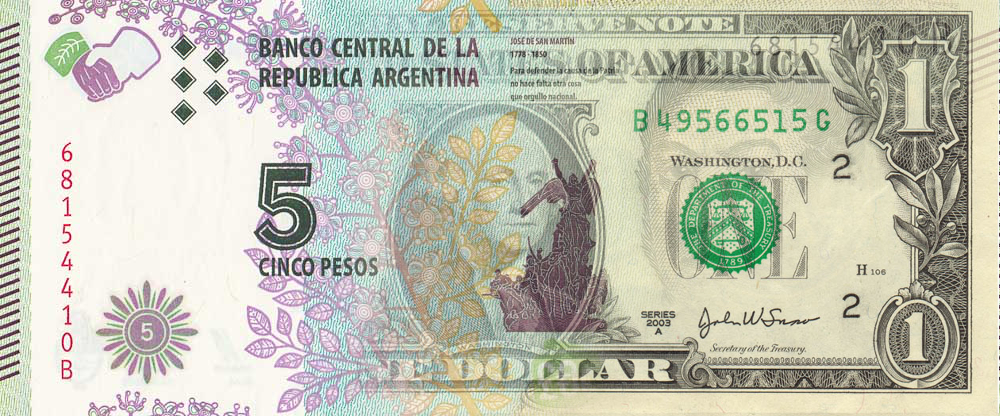
Should Argentina Adopt the Dollar?
Argentina has shown itself incapable of managing the money supply appropriately. It would do better by outsourcing its monetary policy.

-
The History of Money and the Future of Cryptocurrency
In a recent NBER working paper, Barry Eichengreen argues “there is no straight line from commodity money to fiat money and from there to crypto.”

-
How Can Governments Borrow at Such Low Rates?
Those who cite low interest rates on government debt miss the point. It is not the price of government borrowing that matters. Rather, it is the opportunity cost of government borrowing to society.